What does Haku mean in Spirited Away? – Celebrity
 Isabella Harris
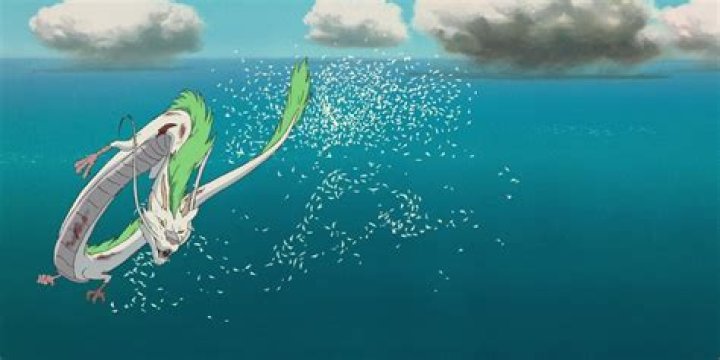
 The name Haku means “master, lord, overseer”, which may refer to his lofty position as Yubaba’s respected apprentice as well as his power as ‘god’ of the river. Kohaku (琥珀) means “amber”, making his english title “Spirit of the Amber River”, similar to his original Japanese title.
Considering this, Why did Haku tell Chihiro not to look back?
In my vantage point, Haku told Chihiro not to look back because she would’ve been somehow stuck between the two dimensions. If not that, Haku just probably didn’t want her to remember looking back at his face while she was leaving the spiritual world.
Why did Haku steal the seal? The seal was stolen by Haku. He acted on behalf of the Witch Yubaba. Because of this order, Haku (as Dragon Ryuu) was almost killed. … Then Zeniba laughs brightly and explains that the worm was a parasite implanted into Haku by her sister Yubaba in order to control him.
Accordingly, How did Chihiro know Haku’s name?
The very next thing Chihiro does is discover Haku’s real name by remembering how she fell into the river. And then she sees through Yubaba’s ruse and recognizes that her parents are not among the pigs.
What did the stink spirit give Chihiro?
After pulling a bicycle (among countless other man-made artifacts) from his body, the River Spirit shows gratitude by giving Chihiro a famous, emetic herbs medicine and leaves the bathhouse happily in his original form, leaving a generous amount of gold as tips for the workers.
How did Chihiro know the pigs were not her parents?
The letter also says the reason Chihiro knew none of the pigs at the end of the film were her parents was not because she had “obtained special abilities” in the spirit world. … After all the things she’s experienced up to that point, Chihiro simply knows that her parents aren’t there.
Is Lin in Spirited Away a human?
Lin is portrayed as a human being in the film. In the Japanese picture book (The Art of Spirited Away in English) Lin is described as a byakko (Japanese: 白虎), a white tiger, in the draft, which was later changed to byakko (Japanese: 白狐) meaning white fox..
What was Zeniba’s spell on Haku?
When Chihiro refuses to hand over Haku and the golden seal, she becomes angry and yells at Chihiro, informing her that Haku is a greedy thief who needs to be punished, and that she placed a curse on the golden seal so that whoever steals it will die.
How old is Haku in Spirited Away?
Haku is a 12 year old boy (though it is likely he is much older do to his true identity) whom is controlled by an old witch named Yubaba, but his soon-to-be acquaintance Chihiro (“A.k.a. “Sen” name given to her by Yubaba) will free him from that control.
Who is Kaonashi in Spirited Away?
No-Face (顔無し, Kaonashi, lit. “Faceless”) is a character in the film, Spirited Away. He is shown to be capable of reacting to emotions and ingesting other individuals in order to gain their personality and physical traits.
What is Haku’s real name?
Later, we learn he is a river spirit who once saved Chihiro’s life and that his real name is Kohaku River. Read an in-depth analysis of Haku/White Dragon.
What color are Haku’s eyes?
Appearance. Haku appears to be around 12 years old in physical age. He has straight, dark green hair in a bob haircut and slanted, green eyes.
ADVERTISEMENT
Was Haku the stink spirit?
Haku, a young river spirit, and the ancient river spirit that was first mistaken as a Stink Spirit, as depicted in Spirited Away (2001). Our relationship with nature is complex and exploring this extends beyond academia. Animated films with powerful narratives can connect humans with nature in ways that science cannot.
What is the ball that Chihiro gets?
When Chihiro becomes overwhelmed and despairs of ever freeing herself and her parents, her friend Haku gives her a Japanese rice ball (called “onigiri”). As she eats, Chihiro calms down and renews her resolve to defeat the sorceress.
What did the rich spirit give Sen?
In gratitude for cleaning him, he gives Sen a magic emetic dumpling.
What is no face supposed to represent?
In an interview, Miyazaki reminded us that Japanese spirits do not have a form, so each spirit, including No-Face, is really just a representation of that god or spirit in a more solid form. … Miyazaki wanted Spirited Away to be a movie tweens could love so it needed some really compelling characters.
Why Chihiro parents turn into pigs?
According to a translation by RocketNews24, Miyazaki turned Chihiro’s parents into pigs to represent the greed that took place during Japan’s recession in the eighties.
Does Chihiro forget?
Well, according to Miyazaki himself, Chihiro did not recall her experience after leaving the spirit world at the end — but added that it doesn’t mean completely forgetting it, and how there’s a likely chance she’ll eventually remember what happened.
What was Haku’s real name?
Later, we learn he is a river spirit who once saved Chihiro’s life and that his real name is Kohaku River. Read an in-depth analysis of Haku/White Dragon.
Are all the pigs in Spirited Away humans?
The spirit clients have many forms, none of the human. Chihiro is the central character. … They are not pig-human hybrids like Porco, who has a human body and can talk. They have become pigs.
Is Kamaji Chihiros grandpa?
When a human doesn’t work in Yūya, they become an animal (e.g., a pig like Chihiro’s parents). … After that persuasion, he helps Chihiro work at the Bathhouse and even pretends to be her grandfather when questioned by Lin to protect her, though this ruse does not last very long.
How did Chihiro know none of the pigs were her parents?
The letter also says the reason Chihiro knew none of the pigs at the end of the film were her parents was not because she had “obtained special abilities” in the spirit world. … After all the things she’s experienced up to that point, Chihiro simply knows that her parents aren’t there.
Why does Chihiro call Zeniba Granny?
Zeniba is still no saint, but her wisdom helps everyone to discover their true identities and abilities. By the end of the film Sen addresses both Zeniba and Yubaba as “Granny,” which suggests not only that both twins are wise in their own way, but that they are merely two sides of the same coin.