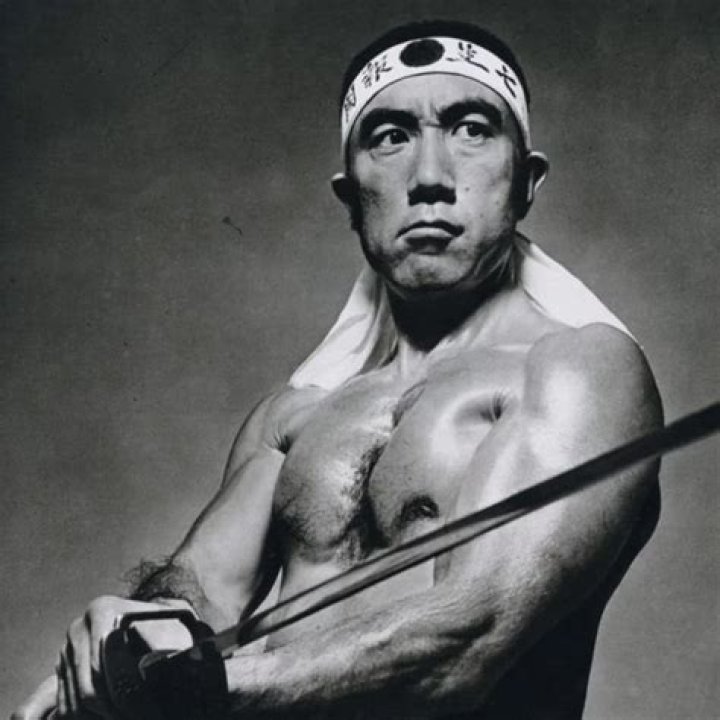
Yukio Mishima Biography - Facts, Childhood, Family Life & Achievements
 John Peck
 economy
Yukio Mishima Biography
(One of the Most Important Japanese Authors of the 20th Century)Birthday: January 14, 1925 (Capricorn)
Born In: Yotsuya, Tokyo, Japan
Advanced SearchKimitake Hiraoka was a Japanese author, playwright, filmmaker, actor, and right-wing activist. He is better known by his pen name, Yukio Mishima. Widely regarded as one of the most important contributors to Japanese literature of the 20th century, he was in the selected group of authors who were considered for the Noble Prize in Literature in 1968 but lost it to compatriot and former mentor Yasunari Kawabata. Some of his most prominent works, such as novels ‘Confessions of a Mask’ and ‘The Temple of the Golden Pavilion’, the Noh play ‘The Lady Aoi’, and the autobiographical essay ‘Sun and Steel’, display an avant-garde blending of traditional and modern aesthetics that transcend beyond cultural boundaries. Mishima was a right-wing nationalist who ardently believed in Japanese traditional values and veneration of the emperor. He founded the Tatenokai, a nationalist militia. In 1970, he led four other members of the Tatenokai to an attempted coup d'état in a military base in Tokyo. They took the commandant hostage and Mishima tried to convince the soldiers there to join the coup. Unsuccessful, he committed ritual suicide by performing seppuku. Since his death, his failed coup has come to be known as the “Mishima Incident”. Quick FactsAlso Known As: Kimitake Hiraoka
Died At Age: 45
Family:Spouse/Ex-: Yoko Sugiyama (m. 1958 – his death. 1970)
father: Azusa Hiraoka
mother: Shizue Hiraoka
siblings: Chiyuki Hiraoka, Mitsuko Hiraoka
children: Iichiro Hiraoka, Noriko Tomita
Quotes By Yukio Mishima Bisexual
Height: 5'4" (163 cm), 5'4" Males
Died on: November 25, 1970
place of death: Shinjuku, Tokyo, Japan
Cause of Death: Suicide
More Factseducation: University Of Tokyo
awards: Q11503628
Recommended For You
Recommended Lists:
Japanese CelebritiesNovelistsPlaywrightsShort Story WritersJapanese Men Childhood & Early LifeBorn on January 14, 1925, in Shinjuku, Tokyo, Japan, Yukio Mishima was one of the three children of a government official named Azusa Hiraoka and his wife, Shizue. He had two younger siblings. His sister, Mitsuko, passed away from typhus at the age of 17 in 1945. His brother’s name was Chiyuki.In the early years of his childhood, Mishima lived with his paternal grandmother, Natsuko (family register name: Natsu) Hiraoka, who took him from his immediate family and kept him with herself for a few years.Despite marrying a bureaucrat who accumulated his wealth through the newly opened colonial frontier in the north (present-day Russia), Natsuko came from an aristocrat family and strove to maintain certain pretensions associated with the Japanese upper-class life.Mishima’s upbringing had a profound effect on his literature and political beliefs. Natsuko often suffered violent and morbid outbursts, which were hinted in Mishima’s works.According to some of his biographers, his grandmother was the reason for his later fascination with death. She did not let him play or socialize with other boys and even kept him away from the sunlight.At the age of 12, Mishima finally returned to live with his parents. His father decided to raise his children in accordance with military discipline. They were severely punished for any misbehaviour. Azusa regularly went into the young boy’s room to look for any evidence of his love for literature and tore apart if he found any of his manuscripts.Mishima began his education at the age of six at Gakushūin, the Peers' School in Tokyo, where he learned German, English, and French. He started to write stories when he was 12 years old.While he was a voracious reader of traditional Japanese stories, he also developed an interest in European literature. His biggest childhood inspiration was poet Michizō Tachihara, whose writings made Mishima appreciate the classical Japanese poetry form of waka. In his early published works, waka poetry features prominently.Some of Mishima’s teachers at Gakushūin originally came up with his pen name to save him from the ire of his fellow students. His first published short story was ‘Sorrel Flowers—Akihiko's Memory of the Early Childhood’ (1938).By the time the World War II broke out, Mishima had already published several other short stories. His first completed play, ‘The Journey’, was not published during his lifetime.Mishima did not have to fight in the war because a young army doctor misdiagnosed him with tuberculosis. He then completed his education, graduating from the University of Tokyo in 1947, and took a job in the finance ministry.While a career in finance definitely held much promise for him, he wore himself out very quickly. Eventually, his father helped him resign from his post within a year of his employment. He subsequently became a full-time writer.